


You noticed it a few months into working from home: the electricity bill was higher than it used to be, and it kept climbing. The aircon runs longer now. The laptop, monitor, router, and phone charger run all day. Lights stay on through the afternoon. It adds faster than most remote workers expect.
The hidden energy cost of remote work is real. When your home becomes your office, every device and every degree of cooling gets absorbed into your personal utilities. The trade-off many professionals face is a familiar one: stay comfortable enough to be productive or cut costs and risk losing focus.
There are smarter ways to manage this. And for many remote workers across the metro, switching to a coworking space in Metro Manila has turned out to be one of the most practical solutions available.
The Real Energy Cost of Working from Home
Air conditioning is the biggest factor. The Department of Energy has flagged cooling appliances as the primary driver of elevated household electricity consumption, particularly during the warmer months — and in Metro Manila, those conditions persist year-round.
Multiple devices running simultaneously compound the problem. A laptop, an external monitor, a router, a desk lamp, and a phone charger operating together throughout the day are not insignificant for loads, especially when they run six days a week.
Poor home setups also tend to stretch work hours. Without a clear endpoint to the workday, professionals often find themselves working later than intended, which means more hours of device and aircon usage. Most remote workers don’t realize how quietly their work from home costs have grown until they compare their current electricity bill to what they were paying before.
Practical Ways to Save Energy While Working Remotely
Most advice on how to save energy at home focuses on appliances and habits. For remote workers, it goes a step further — because your work setup is running on your home grid all day.
These habits are practical, low-cost, and genuinely effective:
- Set firm work hours and stick to them. Defined hours limit how long your devices and cooling run each day, which directly reduces your bill.
- Switch to LED lighting throughout your work area. LED bulbs consume up to 80% less energy than incandescent alternatives and last significantly longer.
- Maximize natural light and ventilation during the cooler parts of the day, typically early morning. Delaying aircon use by even an hour or two makes a measurable difference over a month.
- Unplug chargers and devices when they’re not actively in use. A charger left plugged in continues drawing power even when nothing is connected to it.
- Use power strips with individual switches to eliminate phantom load — the passive energy drains from devices left in standby mode.
- Batch your heaviest tasks for cooler morning hours when you may be able to work with a fan rather than an aircon unit.
These adjustments help, but they need consistent discipline. And for many professionals, the more sustainable solution involves changing where they work rather than how carefully they manage their home setup.
How a Coworking Space in Metro Manila Helps You Cut Energy Costs
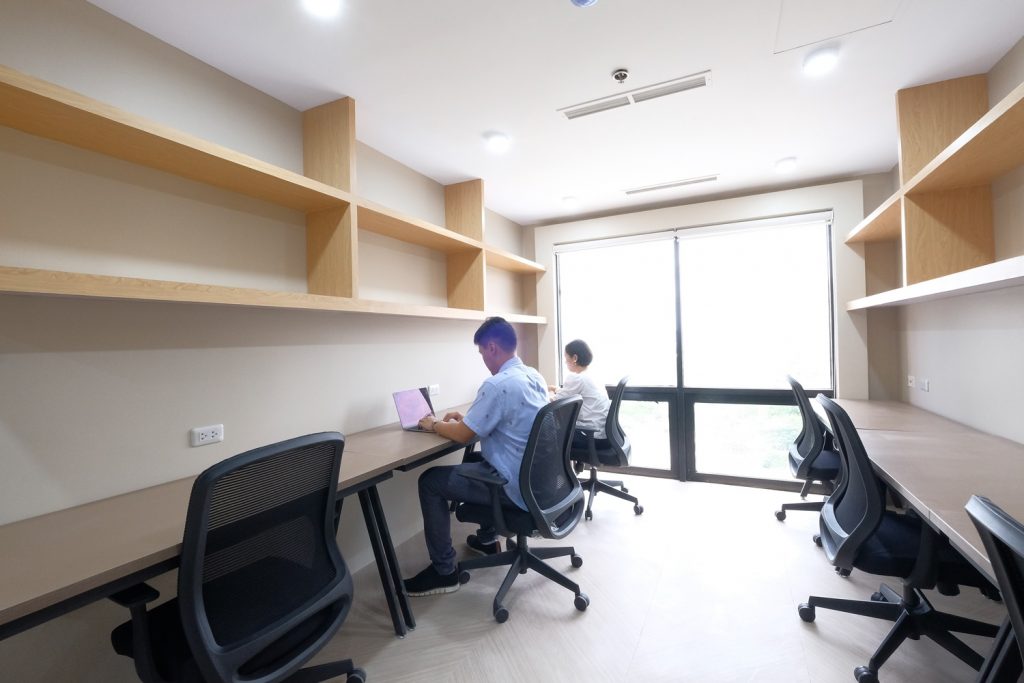
Using a coworking space in Metro Manila is more energy-efficient than a home setup because you share infrastructure costs across many users instead of absorbing them entirely yourself.
When you work from a coworking space, you’re not paying for the air conditioner, the lighting, the internet connection, or the backup power. Those are fixed costs shared across the membership base. Your fee covers your seat — not the entire building.
At home, every working hour translates directly to your electricity meter. At a coworking space, it doesn’t.
There’s also a behavioral benefit worth noting. A dedicated coworking space creates a natural endpoint to the workday. When you leave, you leave. You go home to rest, not to continue working from the dining table. That separation protects your personal time and reduces the additional home energy consumption that comes from extended work-from-home sessions.
For freelancers, remote employees, and small teams evaluating their remote work setup, the math often works out in favor of a coworking membership when electricity savings are factored into the comparison.
Staying Productive While Being Energy-Smart
Remote workers can support strong productivity while cutting energy costs by working in a structured environment that eliminates home distractions, provides reliable infrastructure, and enforces natural working boundaries.
A structured productivity workspace does a lot of the heavy lifting. When your surroundings signal “work,” your brain responds accordingly.
Here’s what that looks like in practice:
- Fewer distractions mean tasks get completed faster, which shortens the total hours you need to work and reduces energy consumption in the process.
- Being around other professionals creates a quiet sense of accountability. Momentum is easier to maintain when the people around you are also focused.
- Reliable infrastructure — fast internet, backup power, and proper lighting — removes the disruptions that derail concentration and stretch the workday unnecessarily.
- Defined working hours at a coworking space to protect your evenings. When the workday has a clear ending, your home stays in a place for rest rather than an extension of the office.
A report by the International Workplace Group (IWG) found that professionals who work from flexible office environments report higher levels of productivity and better ability to disconnect after hours. Both outcomes have direct implications for how much energy is consumed across the day.
M Spaces: A Coworking Space in Metro Manila That Works as Hard as You Do
M Spaces is the smarter alternative to working from home — no traditional lease, no rising energy bills, no connection issues. It offers reliable high-speed internet, backup power for Metro Manila outages, comfortable well-lit workstations, and flexible memberships ranging from hot desks to dedicated desks and private offices — everything you need to stay productive without the hidden costs of home-based work.
Visit M Spaces to explore memberships and book a tour, or reach the team at info@mspacesph.com, +63 967 521 2824 (mobile), (+632) 5328-5300 (landline), or via Facebook.
Conclusion
Saving energy while working remotely requires intentional choices — about your equipment, your habits, and most importantly, where you work.
Your remote work setup directly affects how much energy and money you spend each month. Working from home is not inherently the most efficient choice, especially in a high-heat, high-humidity environment like Metro Manila where aircon usage is rarely optional.
The smarter step is choosing a coworking space in Metro Manila that absorbs those costs and gives you a focused, reliable environment in return. Your productivity improves, your bills go down, and your home goes back to being the place where you rest.
That’s not a minor upgrade. It’s a fundamentally better way to work.


